Home > Premium Metal Grinding Wheels, Japanese Quality by FUJI
Premium Metal Grinding Wheels | Japanese Quality by FUJI
Metal Grinding Wheels for Steel Fabrication & Castings
Japanese quality. Practical choices for everyday production.
Compare compact 100mm Super F2, 180mm Super F2 for larger steel grinding tasks, and Super Z zirconia wheels for demanding casting cleanup. Get specification support for your factory, maintenance team or distribution business in Southeast Asia.
Super F2 is FUJI’s affordable, practical series for routine industrial grinding. Super Z provides a zirconia option for more demanding work. These three selections are part of the wider FUJI range.
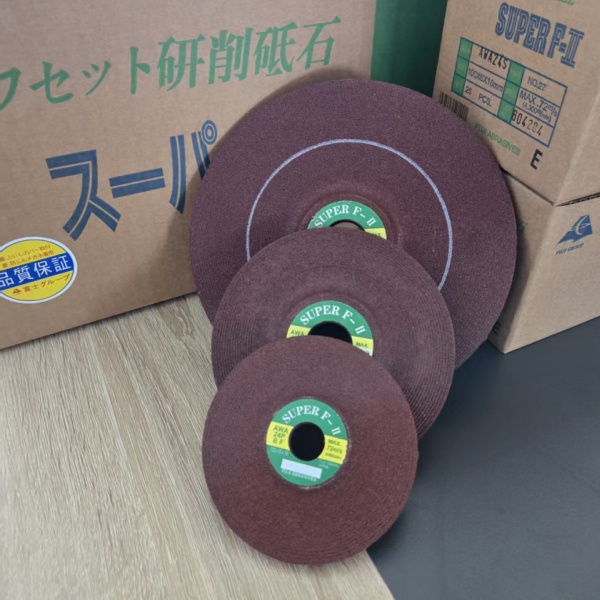
100mm Super F2
Compact everyday steel grinding
Featured size: 100 × 6mm. Selected aluminum oxide abrasive for weld cleanup, deburring, edge preparation and maintenance. A compact option where maneuverability matters and the grinder and guard have sufficient clearance.
Featured size: 180 × 7mm. Aluminum oxide for steel fabrication, shipyard work and larger welds. Compare available thicknesses and grades with your equipment and required finish.
Featured size: 180 × 6mm, zirconia HAZ20S. An option for demanding foundry work and heavy stock removal. Evaluate removal rate, wheel wear and cost per casting under your production conditions.
Diameter alone does not establish compatibility. Confirm bore, thickness, wheel type, mounting and rated speed for the exact specification supplied.
Applications: From Weld Cleanup to Foundry Work
Steel Fabrication & Weld Grinding (溶接ビード研削)
Use Super F2 as a starting point for carbon steel and general steel weld cleanup, burr removal and edge preparation. Choose the compact 100mm setup for localized work, or a compatible 180mm setup for larger accessible surfaces and sustained removal.
Shipyard Maintenance & Casting Cleanup (鋳物のバリ取り)
For steel repairs and fabrication, compare Super F2 specifications. For demanding casting cleanup, evaluate Super Z against your current wheel. Compare time per task, material removed, wheel consumption and handling rather than purchase price alone.
A FUJI high-frequency grinder may be considered where its approved wheel dimensions and speed match the selected abrasive.
Selected Materials & Japanese Warm-Press Technology
Super F2 Materials
Selected white and brown aluminum oxide abrasives, phenolic resin and alkali-free fiberglass reinforcement form the basis of the Super F2 range. Application-matched formulations balance useful grain retention and release.
Hot Press: FUJI’s Warm-Press Forming
In FUJI’s process descriptions, “Hot Press” refers here to warm-press forming, typically at 40–80°C depending on materials, size and product. Controlled warmth helps manage binder distribution during forming; subsequent curing is a separate stage.
Compare Performance on the Workpiece
Performance depends on the complete formulation, reinforcement, forming and curing process. Compare grinding time, material removed and wheel wear under matched working conditions. Warm pressing alone does not establish a safe operating speed.
In the linked comparison, G-Ratio means the mass of workpiece removed divided by wheel mass consumed (g/g). It measures material removal relative to wheel wear; it is not the same as grinding speed.
FUJI Manufacturing & Quality Background
With more than 70 years of abrasive experience, FUJI combines Japanese quality management, manufacturing process control and practical application knowledge. Super F2 offers an affordable starting point; other FUJI series serve different materials and production requirements.
The following FUJI video documents a 100 × 6mm Super F2 sample withstanding 30,000 RPM during a laboratory test. This result applies to the demonstrated sample and test conditions; it must not be generalized to other sizes or series.
30,000 RPM is a test speed, not a working speed. Follow the maximum operating speed marked on the wheel. The video is not a substitute for the specification and documentation of the wheel you purchase.
Technical Guidance & Machine Compatibility
Keep these checks with your purchasing specification and operating instructions:
Dimensions and mounting: match diameter, thickness, bore, wheel type, flanges and guard to the grinder manufacturer’s requirements.
Speed: the grinder’s rated no-load speed must not exceed the wheel’s marked maximum RPM. Check the actual marking; do not assume every size has the same m/s rating.
Material and task: confirm the formulation for your workpiece. Use a dedicated cutting wheel for cutting operations and an appropriate finishing abrasive where required.
Use and inspection: follow the wheel and machine instructions for inspection, storage, guarding, protective equipment and operating technique.
Grinding Wheel Structure
Abrasive grains, resin bond and fiberglass reinforcement work together in a reinforced grinding wheel. The formulation and structure must suit the intended task.
Calculator guidance: conversions are mathematical references only. They do not certify compatibility or override the wheel label or grinder instructions. Enter positive values and use the actual rated peripheral speed. The RPM result is rounded down.
Grinding Wheel Speed Calculators
Convert Rated Speed to RPM
mm
m/s
Calculated RPM — reference only
Enter positive values
Calculate Peripheral Speed
mm
RPM
Calculated Peripheral Speed
Enter positive values
Standard Calculation Formula
To ensure precision in your technical specifications, use the following standardized formula for peripheral velocity conversion:
V (m/s) = (π × D × n) / (60 × 1000)
Legend:
V: Peripheral Speed (meters per second)
D: Outer Diameter (mm)
n: Rotational Speed (min-1 or RPM)
π: 3.14159
Other Sizes & Material-Specific Options
115mm Super F2: a compact option for compatible 4½-inch equipment.
125mm × 6mm steel grinding: a medium-duty choice between compact 100mm and larger 180mm setups. 150mm options are also available; request the required specification.
125mm aluminum grinding: a dedicated material-specific formulation, distinct from the ordinary steel wheel.
Metal cutting: select a dedicated cut-off wheel for the material and machine.
Specification Support for Factories & Distributors
For factory procurement, maintenance teams and Japanese-affiliated manufacturers in Southeast Asia, start with the production task and existing equipment. FUJI can assess standard supply, evaluation requirements and application-specific grit, hardness or formulation requests.
Describe the job: material grade, weld or casting condition, accessible work area and required finish.
Share the setup: grinder model, speed and current wheel dimensions and grade.
Define the purchase: monthly consumption, order quantity, packaging and delivery country.
Set the evaluation target: removal time, wheel wear, handling or cost per finished part. Availability, samples, MOQ and lead time are confirmed with your quotation.
Super F2 is an affordable aluminum oxide option for everyday steel fabrication and maintenance. Compare Super Z zirconia wheels for demanding casting cleanup and heavy stock removal. Assess grinding time and wheel consumption on your actual workpiece.
Is the 125mm steel wheel the same as the aluminum grinding wheel?
No. The 125mm × 6mm general steel option and the aluminum-specific wheel use different application-focused formulations. Tell us the workpiece material when requesting a specification.
What do 24S and 36P mean?
24 and 36 describe grit size; S and P describe bond hardness grade. 24 is coarser than 36, and S is harder than P. Selection also depends on material, grinder power and contact area. These designations do not by themselves guarantee longer life or lower vibration.
Can these wheels be used on high-frequency grinders?
Only when the selected wheel and grinder are compatible. Check approved diameter, thickness, bore, flanges, guard and maximum RPM. A high-frequency drive does not remove these requirements.
Does the 30,000 RPM test specify an operating speed?
No. The video concerns a FUJI Super F2 100 × 6mm test sample. It is not an operating-speed recommendation, a rating for other models or a guarantee for every production wheel. Always follow the maximum speed marked on the actual wheel.
What should our procurement team send for a recommendation?
Send the material grade, grinding task, current wheel, grinder model and speed, monthly usage, delivery country and improvement target. FUJI can assess standard specifications, evaluation requirements and custom formulations.
Find the Right Wheel for Your Production Line
Send your material, grinder details and current wheel specification. We will help assess the appropriate FUJI option for your application and purchasing requirements.

 Grinding wheel selection guide