Choose a grinding wheel by material, operation and machine compatibility first; compare removal rate, wheel wear and finish second. This FUJI grinding wheel selection guide focuses on resin-bonded wheels for portable metalworking, including weld removal, foundry fettling and surface preparation. It also explains where cutting discs, flap discs and precision surface-grinding wheels require a different selection approach.
FUJI is a Japanese manufacturer of abrasives and power tools with more than 70 years of history. For buyers comparing Japanese grinding wheels, a useful decision is based on a specific wheel specification and a representative trial, rather than a general claim that one brand is best for every job.

Use this table to shortlist a product family, then confirm the exact specification with the supplier. Material hardness alone does not determine the correct abrasive.
| Material / task | Starting point | What to confirm |
|---|---|---|
| Carbon steel weld removal and beveling | Steel-rated reinforced grinding wheel; evaluate the FUJI Super F-2 family | Stock removal, wheel wear, grinder power and required finish |
| Stainless steel weld dressing | Stainless-rated wheel; evaluate FUJI Super W | Alloy, heat sensitivity and project-specific contamination limits |
| Foundry gates, risers and flash | Casting-specific grinding wheel selected for the actual alloy | Cast iron versus cast steel, casting skin, access and machine duty |
| Aluminum, copper alloys or marine propellers | Wheel specifically approved for the non-ferrous alloy | Loading tendency, alloy composition and suitable formulation; do not assume a steel wheel is appropriate |
| Blending and surface preparation | Suitable flap disc or finishing abrasive after rough grinding | Scratch depth, dimensional allowance and finish requirement |
| Separating metal sections | Cutting disc rated for the material and machine | Cutting-only restrictions, guard and maximum speed |
A straight wheel has a flat profile. Diameter, bond and approved machine vary widely; it is not inherently limited to small wheels or one tool type. See the FUJI straight wheel range for specific products. Confirm the permitted working surface. A flat cutting disc is not automatically suitable for side grinding.
The recessed center provides mounting clearance for many portable grinding applications. These are also searched for as recessed grinding wheels or offset grinding discs. Type 27 grinding wheels are commonly used for weld removal, beveling and stock removal. Follow the exact product's recommended working angle and contact area; wheel shape alone is not an operating instruction.
A saucer profile can suit a different contact geometry from Type 27. Choose it only where the wheel, tool and guard are approved for the task. Do not assume every saucer wheel can work flat at zero degrees or reach confined corners safely.

| Typical grit range | Selection purpose | Trial check |
|---|---|---|
| 24–36 | Coarse stock removal and weld reduction | Removal rate and scratch depth |
| 46–60 | Intermediate grinding where offered | Balance of removal and finish |
| 80 and finer | Finer preparation with a suitable abrasive format | Residual scratches and final surface requirement |
Available grits depend on the product family. Progress through abrasives that remove the previous scratch pattern; there is no universal grit sequence that fits every material and finish.
Wheel grade describes grain-holding strength, not the hardness of the abrasive grain. A grade that retains dull grains too long may glaze; one that releases grains too readily may wear quickly. Letter grades need the manufacturer's context and cannot be used as a universal cross-brand performance scale.
Check diameter × thickness × bore (or thread), wheel type, permitted operation, maximum RPM and any expiry or storage instructions. For example, 180 × 7 × 22.23mm describes three dimensions; it does not establish compatibility by itself. The grinder's maximum speed must not exceed the wheel's maximum rated RPM. Do not enlarge the bore or remove a guard to fit an oversized wheel.
The FUJI Super W grinding disc range is a starting point for stainless steel applications. Confirm the current size, grit, rated speed and material recommendation for the exact variant. Evaluate discoloration, removal rate and surface condition in your process; do not treat a product-family description as a guarantee against heat damage or contamination.
Evaluate the 180mm FUJI Super F-2 grinding disc for compatible heavy grinding tasks. Compare wheel consumption and accepted output under the same conditions. A result from another wheel size or test does not establish a fixed percentage advantage for this product.
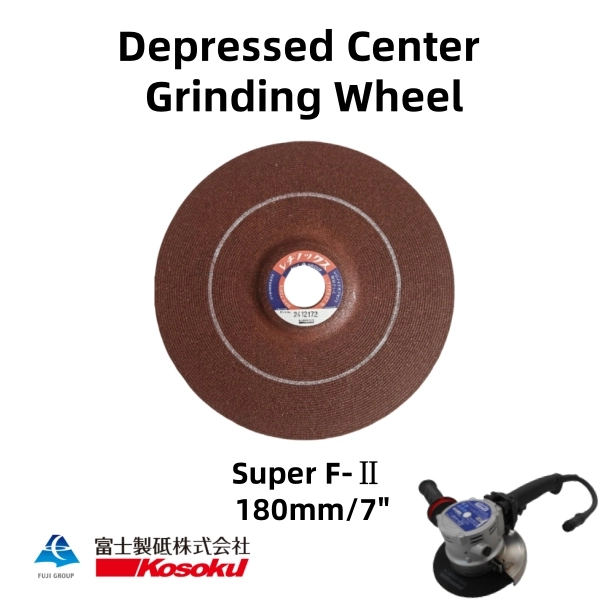
Browse the FUJI grinding and polishing range when the task needs a different abrasive format. The product page and wheel marking should govern the final selection.
Foundry work includes removing gates and risers, fettling flash and cleaning casting surfaces. Cast steel, gray iron, ductile iron and non-ferrous castings can require different wheel formulations. Include the casting alloy, surface condition and amount of stock to remove in the inquiry.
If you are searching for the best grinding wheel from Japan, define “best” for your operation: acceptable finish, removal rate, wheel life, handling and total job cost. Brand origin and a manufacturing-process label alone do not prove the result.
See the FUJI 4-inch grinding wheel wear and metal-removal test for an example of reporting both removal and wear. Its results apply to the stated test, not every FUJI model. When comparing a grinding ratio, establish whether it is mass-based or volume-based before comparing numbers.
For supplier qualification, use our abrasive wheel supplier evaluation guide. For U.S. fabrication purchasing considerations, see the metal grinding wheel buyer's guide.
| Problem | Possible contributors | What to check |
|---|---|---|
| Rapid wheel wear | Wheel grade, excessive pressure or unsuitable application | Confirm material and operating conditions; trial another approved specification |
| Glazing or poor removal | Dull retained grains, unsuitable wheel or operating conditions | Review formulation, tool speed and application with the supplier |
| Loading with metal | Material adhering to the wheel, especially some non-ferrous alloys | Use an alloy-approved formulation; do not improvise dressing on a reinforced portable wheel |
| Discoloration or gouging | Heat, dwell, pressure or an unsuitable abrasive | Review technique and abrasive choice; inspect whether rework is needed |
| Abnormal vibration or damage | Wheel, mounting or tool fault | Stop and isolate the tool; inspect before further use |
For the distinction between loading, glazing and approved conditioning, read the grinding wheel dressing and resin disc safety guide.
Inspect before mounting, reject damaged wheels and use the specified guard and mounting components. Follow the wheel and tool manufacturers' instructions for flange design, tightening, permitted working surface and trial running. Ring testing is not a universal integrity test for all resin-bonded reinforced discs.
Keep the machine speed within the wheel rating, use task-appropriate protection and control sparks and dust. A cutting-only disc must not be used for side grinding. The Norton grinding-wheel safety guidance provides general checks; the exact wheel and machine instructions remain essential.
Start with the steel grade and task, then confirm the wheel type, diameter, thickness, bore and maximum RPM against the grinder manual. Trial a steel-rated wheel for removal rate, wear and finish before ordering in volume.
A depressed center wheel has a recessed mounting area. Type 27 is a common profile for portable grinding, but the profile alone does not authorize cutting or every working angle. Use the working surface and angle specified for the exact wheel.
Select a wheel explicitly recommended for stainless steel, such as an appropriate FUJI Super W specification. Confirm any contamination limits required by the job and keep abrasives used on carbon steel separate. Abrasive grain alone does not establish suitability.
Only if the exact wheel is explicitly approved for both operations and the tool and guard are compatible. Do not side-grind with a wheel marked for cutting only.
Compatibility depends on the exact wheel and tool, including diameter, thickness, bore or thread, flanges, guard, permitted operation and speed. The grinder maximum speed must not exceed the wheel maximum rated RPM. Brand or bore size alone is insufficient.
There is no single best wheel for every casting. Specify the alloy, casting condition, stock to remove, machine and required finish, then compare compatible wheels using a controlled trial and cost per accepted part.
Browse related application and safety resources in the FUJI Technical Guides library.
Send the workpiece alloy, operation, grinder model and maximum RPM, current wheel dimensions, monthly usage and the problem you want to solve. Include finish requirements and destination market so we can discuss suitable specifications and a representative trial.


