

By the Fuji Grinding Engineering Team | Heavy-Duty Metal Processing Experts
Marine propeller grinding calls for a controlled combination of grinder power, abrasive selection and surface inspection. From casting clean-up and weld dressing to preparation for final finishing, the aim is to remove unwanted material efficiently while preserving the specified blade profile.
This guide explains how a FUJI 180mm high-frequency angle grinder can be paired with Super Z for heavy stock removal, Super F2 for medium grinding and flap discs for surface refinement. Confirm the propeller alloy and repair procedure before selecting the abrasive.
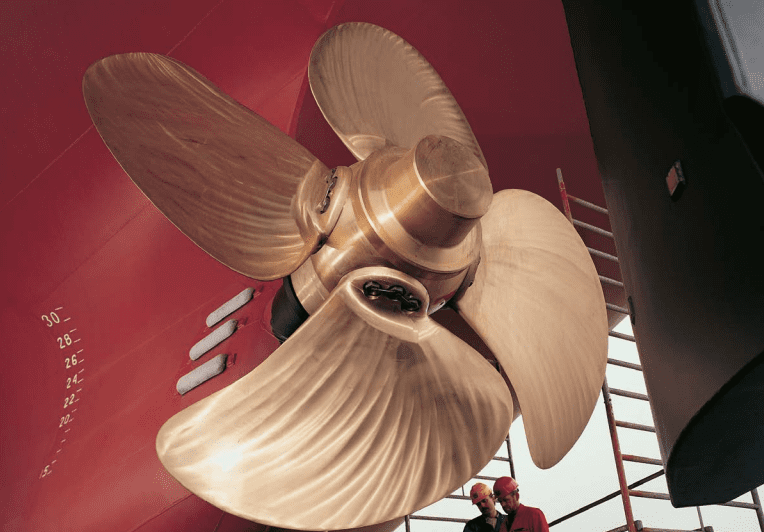
Marine Propeller Grinding: Load, Access & Surface Control
Large curved blades, variable contact areas and sustained grinding loads make tool selection important. Assess the actual alloy grade and casting condition rather than treating every propeller as the same material.
- Speed under load: A grinder that slows substantially during contact can make material removal less consistent. Compare tools under the same working conditions.
- Profile control: Avoid excessive local removal at blade edges and repaired areas. Stable output supports control but does not replace dimensional or surface inspection.
- Downtime: Tool servicing, abrasive changes and power interruptions all affect productive grinding time.
- Total process cost: Compare accepted finished work, abrasive consumption and operator time, not motor power alone.
Marine Propeller Grinding Demonstration
The demonstration below shows the FUJI high-frequency grinding system in a marine propeller application. Use it to examine tool access, working posture and the grinding sequence.
For a meaningful on-site comparison, record the alloy, grinder and power supply, abrasive specification, operator time, material removed and wheel consumption. Assess the finished profile and surface against the same acceptance criteria. A demonstration alone does not establish a universal productivity percentage or surface roughness.
Watch the marine propeller grinding demonstration.
FUJI 180mm High-Frequency Angle Grinder for Shipyard Work
The FUJI 7-inch (180mm) high-frequency angle grinder uses a squirrel-cage asynchronous induction motor. It has no carbon brushes or commutator, so it is brushless in construction; it is not a brushless DC motor.

What the System Offers
- Sustained-load grinding: The high-frequency system is designed to support stable grinding output during demanding industrial work. Actual speed behavior depends on the model, load and matched power supply.
- No carbon-brush replacement: The motor eliminates brush and commutator servicing. Bearings, gears, cables and other components still require inspection and maintenance.
- Matched power system: Select the approved high-frequency supply for the grinder's rated voltage and frequency, input power and number of connected tools. Do not assume compatibility with an arbitrary VFD.
Before commissioning, verify the wheel diameter, bore, mounting hardware, guard and marked maximum speed against the selected grinder's instructions.
Choose Super Z, Super F2 or Flap Discs by Grinding Stage
FUJI supplies grinding equipment and abrasives through our official website. Match the abrasive to the actual workpiece alloy and the required operation, then confirm the diameter and speed compatibility.
- Heavy grinding and casting clean-up: FUJI Zirconia Abrasive Discs-Super Z is the primary choice here for demanding stock removal and dressing gate or riser remnants after separation. Its zirconia abrasive suits heavy grinding applications; confirm the grade for the propeller alloy.
- Medium grinding and weld dressing: FUJI Alumina Grinding Wheels-Super F2 offers an affordable option for suitable general-metal grinding tasks where an aggressive heavy-grinding wheel is unnecessary.
- Fine grinding and surface finishing: FUJI Flexible Flap Discs can blend grinding marks, refine contours and prepare the surface for subsequent polishing. Select the abrasive material and grit for the finish required; flap-disc finishing is not automatically a final mirror polish.
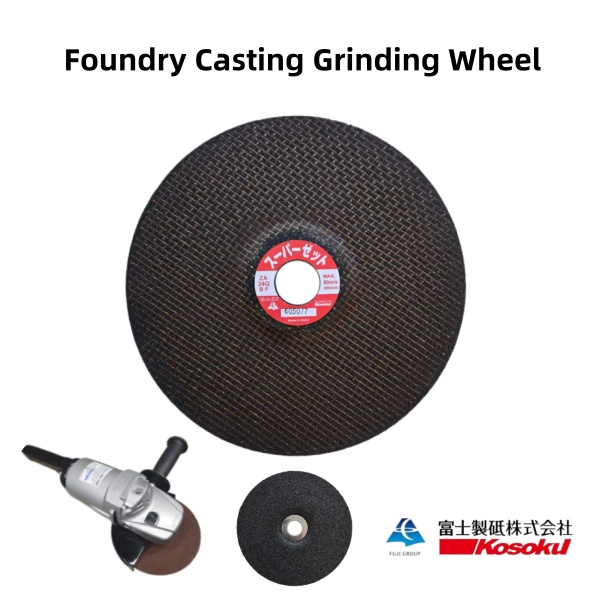
Use progressively finer abrasives when the finishing specification requires it. Inspect repaired areas and blade profiles between stages; a smoother-looking surface alone does not verify dimensional accuracy or hydrodynamic performance.
Why Work with FUJI?
With more than 70 years of experience, FUJI develops abrasive wheels and industrial grinding equipment. This combination allows the grinder, power supply and consumable to be considered together for practical production needs.
For marine propeller manufacturers and repair workshops, selection starts with the material and process: heavy casting clean-up, medium grinding or surface refinement. FUJI can discuss an appropriate equipment and abrasive combination and help define a useful application trial.
Frequently Asked Questions
Can we arrange an application trial?
Contact FUJI with your location, workpiece material and current process. The team can discuss trial availability and a suitable evaluation plan. Compare tools using the same task and finish criteria.
Which certifications apply to the equipment?
Request the current documentation for the exact grinder and power-supply model and your destination market. Certification status and applicable declarations must be checked for the supplied configuration.
Does this high-frequency motor use carbon brushes?
No. It is a squirrel-cage asynchronous induction motor without carbon brushes or a commutator. It is therefore brushless, but should not be described as a brushless DC motor.
Is a dedicated high-frequency power supply required?
Yes. Use a compatible high-frequency supply approved for the selected grinder. Confirm rated voltage, frequency, connectors and capacity before installation; a standard mains socket or an arbitrary VFD is not a substitute.
Which abrasive should we choose for the propeller alloy?
Start with the exact alloy and operation. Super Z is the main option for heavy grinding, Super F2 for suitable medium grinding, and flap discs for blending and surface finishing. Confirm abrasive suitability for non-ferrous or specialty alloys before production use.
How should grinding efficiency be compared?
Use the same workpiece material, task and acceptance criteria. Record grinding time, material removal, wheel wear, stoppages and finished-part quality. Compare cost per accepted job rather than applying a general efficiency multiplier.
Discuss Your Marine Propeller Grinding Requirements
For a suitable grinder and abrasive recommendation, provide the alloy grade, propeller dimensions, grinding stage, current equipment, available power supply and target finish. Include photographs and the production or repair requirements.
Specify whether you need Super Z for heavy removal, Super F2 for medium grinding or flap discs for surface finishing. FUJI can help assess the combination and prepare a quotation.


