The FUJI HGC-902 250Hz high-frequency angle grinder combines a manageable 7-inch format with a 180mm zirconia grinding wheel for gray cast iron fettling. Its main tasks are flash removal and surface cleaning on automotive cast components, where operators need both effective material removal and a tool they can handle repeatedly throughout the job.
250Hz is an established operating frequency for high-frequency power tools in Japan. FUJI's 250Hz tool technology has more than 30 years of use in the Japanese market. The HGC-902 runs on a compatible 250Hz, three-phase 200V supply, using a three-phase squirrel-cage induction motor without carbon brushes or a commutator.
This is an AC induction motor, not a brushless DC motor. The system requires a suitable high-frequency power source; it must not be connected directly to an ordinary 50/60Hz outlet. Learn more about FUJI high-frequency grinding technology.
The 7-inch HGC-902 weighs a little over 4kg. Some European 9-inch 300Hz high-frequency grinders weigh around 8kg. For operators who find larger tools tiring to lift, position and guide, the smaller FUJI configuration offers a more manageable option while retaining useful capacity for foundry grinding.
This comparison concerns different tool sizes and models. Lower frequency alone does not make a grinder lighter or more durable. A 9-inch tool may be appropriate for a different removal task; selection should consider casting size, access, wheel capacity and operator handling. Assess the working weight with the wheel and accessories fitted, and include cable handling in a trial.
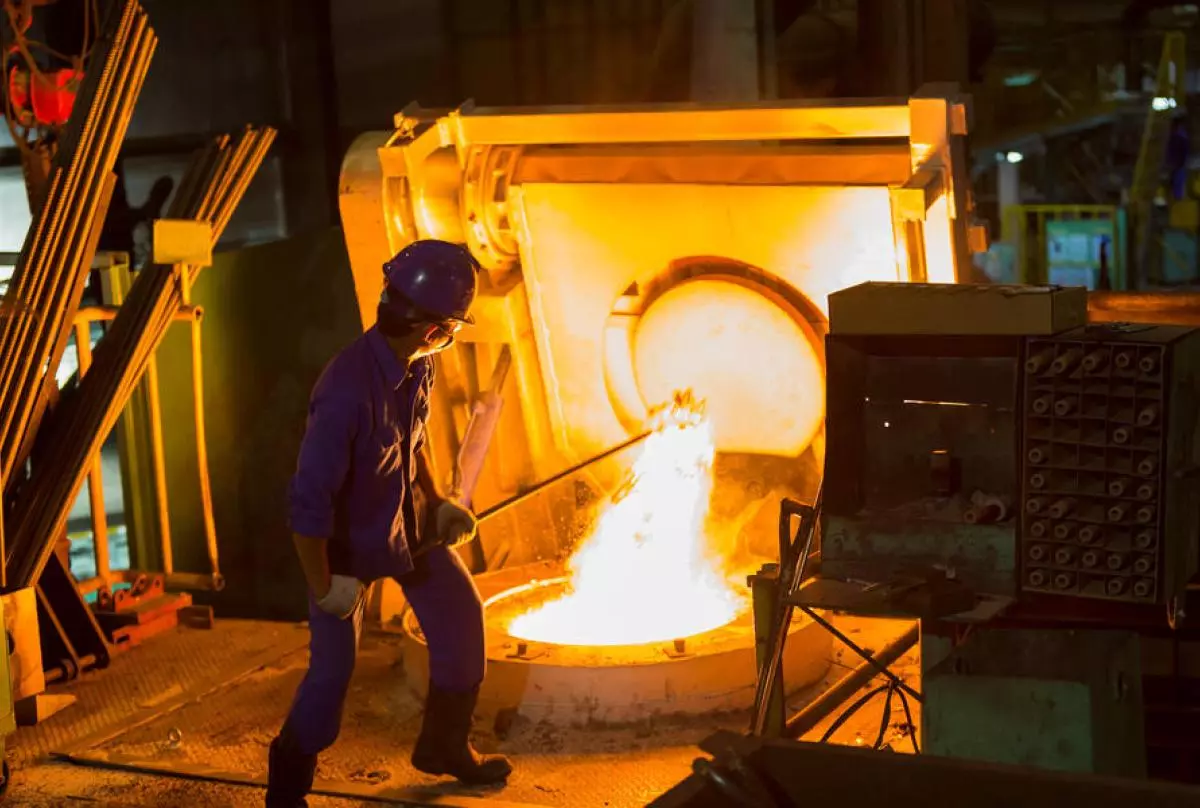
Foundry production requires a grinding setup matched to the casting and the operator's task.
| Angle grinder | FUJI HGC-902, 7-inch high-frequency angle grinder |
|---|---|
| Power supply | 250Hz, three-phase 200V; compatible high-frequency supply required |
| Motor | Three-phase squirrel-cage induction motor; no carbon brushes or commutator |
| Tool weight | A little over 4kg; confirm the exact supplied configuration when ordering |
| Grinding wheel | 180mm zirconia abrasive wheel developed for casting grinding |
| Workpiece and tasks | Gray cast iron automotive components; flash removal and casting surface cleanup |
Confirm the wheel thickness, bore, mounting arrangement and marked maximum operating speed against the HGC-902 specification. A 180mm diameter alone does not establish compatibility. Use a grinding wheel for its intended grinding operation, not as a substitute for a cutting disc.

FUJI high-frequency system illustration. Confirm the supplied grinder and power-source specifications for the HGC-902 configuration.
On gray iron automotive castings, the objective is to remove unwanted material while preserving the required component profile. The compact 7-inch format is useful where repeated repositioning and access around casting features matter as much as the maximum removal capacity of a larger wheel.
The zirconia abrasive wheel and high-frequency tool should be evaluated as a working combination. Actual output depends on casting geometry, material condition, wheel grade, operator technique and the required finish. Explore related foundry grinding applications.
For an HGC-902 installation, confirm 250Hz and three-phase 200V at the tool supply, together with available capacity, connectors, cables, earthing and protection. FUJI can help select a compatible grinder and power-source package after reviewing the site supply and number of tools to be operated.
If your plant already uses 300Hz infrastructure, consider the HGC-3902 300Hz model as a separate selection route. Matching frequency is only one requirement: confirm voltage, connections, capacity and manufacturer-approved compatibility before connecting any tool. The 250Hz HGC-902 should not be treated as a direct substitute on a 300Hz supply.
See the 7-inch high-frequency grinder range for related configurations.
A useful foundry trial compares the same casting, removal task and acceptance criteria. Record:
When comparing with air tools, account for the compressed-air system rather than comparing only motor ratings. These measurements provide a basis for estimating cost per finished casting; no fixed productivity or energy-saving percentage applies to every installation.

Application illustration. Assess tool access, posture and handling on the actual workpiece during a trial.
The induction motor eliminates carbon-brush replacement, but the grinder still requires inspection and maintenance. Follow the tool manual for checks of gears, bearings, cables, connectors, guards and mounting parts. Damaged or worn components should be assessed and replaced as required; stop using a tool with abnormal vibration, noise or damaged electrical parts.
Use appropriate PPE, secure the casting and follow the wheel and tool instructions. Lower tool weight does not remove vibration exposure or other grinding risks. Plan working methods and exposure controls using the relevant grinder vibration and HAVS guidance.
Yes. Contact FUJI with the casting material, photographs, grinding task, existing equipment and available power supply. Our team can discuss a suitable trial arrangement, including regional availability and the proposed wheel configuration.
It requires a compatible 250Hz, three-phase 200V supply. Send the power-source nameplate and connection details for review. Do not assume that a 300Hz system or an ordinary mains outlet is suitable.
The HGC-902's smaller format and weight of a little over 4kg can make repeated positioning more manageable. A larger tool may suit a different removal requirement. Compare access, cycle time and operator handling on your casting rather than choosing by frequency alone.
No. It uses a three-phase squirrel-cage induction motor without carbon brushes or a commutator. Gears, bearings and other mechanical or electrical components still require maintenance.
Request the current documentation and warranty terms for the exact model and destination market before ordering. Service life depends on use and maintenance; it is separate from the agreed warranty. FUJI can also discuss replacement parts and service support.
FUJI combines grinding-wheel expertise with high-frequency tool application support. More than 30 years of Japanese-market use underpin its 250Hz technology. For foundries, the practical focus is a suitable tool, abrasive and power supply working together on the required casting cleanup task.
Share your casting material, photographs, flash-removal or cleaning task, current grinder and power supply, and required quantity. FUJI can recommend an HGC-902 system configuration and discuss a trial on your components.
Request a Quote or Trial


