

Introduction
The best grinding wheel supplier is the one that can match your material, machine and production requirements with consistent products, clear documentation and dependable supply. This guide helps workshops, shipyards and foundries compare abrasive wheel manufacturers, distributors and specialist suppliers.
Start by choosing the right abrasive wheel for the application, then compare technical support, trial results and total cost. Product breadth is useful, but the right specification and repeatable supply matter more than the longest catalog.

Types of Abrasive Wheels
To select the best supplier, you must first understand the diverse range of abrasive products required for modern workshop tasks. A superior supplier should offer a comprehensive portfolio covering both grinding and cutting applications.
Grinding Wheels
Grinding wheels are the workhorses of metal removal. They are designed to withstand high pressure and friction to smooth welds, remove rust, and shape metal components.
Metal Grinding Wheels
Metal grinding wheels are specifically engineered for ferrous and non-ferrous metals. Leading suppliers distinguish between materials to maximize lifespan:
- Carbon steel: aluminum-oxide formulations are an established starting point; select the wheel grade and construction for the task and grinder.
- Stainless steel: use a wheel approved for stainless and verify any required contamination limits. Aluminum oxide, zirconia and ceramic formulations should be compared by application, not assumed to guarantee cool grinding.
- Cast iron: confirm the iron grade, casting condition and removal task. Ask manufacturers such as FUJI Grinding Wheel for an appropriate formulation and trial procedure.
Type 27 depressed-center grinding wheels are used for many handheld grinding tasks. Follow the specific wheel and tool instructions for mounting, guard, speed and working angle; wheel shape alone does not establish every permitted use.
Bonded Abrasive Products
The "bond" is the glue that holds the abrasive grains together, and it is the secret sauce of any grinding wheel.
- Resinoid bonds (B): resin-bonded wheels are widely used for cutting and grinding. FUJI uses “Hot Press” to describe its warm-press forming process at 40–80°C, depending on the product, followed by a separate curing stage. Formulation, reinforcement and process control must be evaluated together; a pressing label alone does not establish superior durability or safety.
- Vitrified Bonds (V): Used primarily in precision grinding, these rigid, glass-like bonds are a staple of brands like Tyrolit for stationary machine applications.
Cutting Wheels
While grinding wheels shape and smooth, cutting wheels are designed for one purpose: slicing through metal with speed and precision.
Abrasive Cutting Wheels
Modern workshops demand versatility in cutting.
- Ultra-thin cut-off wheels: select the thickness and formulation for the material and tool. Compare cutting time, kerf and consumption under matched conditions. Country of manufacture alone does not establish safety or performance; do not side-grind with a cut-off wheel.
- Heavy-Duty Chop Saw Wheels: Large diameter wheels (305mm–405mm) for stationary machines must possess immense structural integrity to cut through solid steel bars without wandering.

Key Features to Look for in Suppliers
With thousands of abrasive brands flooding the market, distinguishing a partner from a mere vendor requires scrutiny. Use the checklist below to evaluate potential partners.
| Purchasing criterion | Evidence to request |
|---|---|
| Product fit | Part number, dimensions, approved materials, wheel type and speed rating |
| Quality control | Batch traceability, relevant test documentation and complaint-handling procedure |
| Application support | Advice based on your grinder, material, task and trial results |
| Standards and certificates | Exact standard, certificate scope, applicable product and current supporting documents |
| Supply reliability | Confirmed quantity, lead time, shipment origin and delivery terms |
Manufacturer, Distributor or Multi-Brand Supplier?
An abrasive wheel manufacturer produces products within its stated manufacturing scope. A distributor supplies products from manufacturers, while a multi-brand supplier can offer several alternatives. These roles may overlap. Buying directly does not automatically provide the best delivery or total cost.
- Manufacturer: verify production scope, traceability, technical capability and minimum order requirements.
- Distributor: check authorization where relevant, local availability, application support and after-sales service.
- Multi-brand supplier: assess specification matching, replacement options and procurement convenience.
Quality Assurance Standards
Ask for documentation relevant to the exact wheel and intended market. Quality-system certification, product-standard conformity and trade-association membership are different forms of evidence; they are not interchangeable product approvals.
Ask the supplier to explain its inspection and test program, the scope of any certificate and how batches are identified. Do not assume every manufacturer tests every wheel in the same way. Production overspeed tests are not permission to exceed the operating speed printed on the wheel.
Variety of Products Offered
A "one-stop-shop" capability saves time.
- Broad vs. Deep: Giants like Saint-Gobain offer everything from sandpaper to diamond wheels. However, "Deep" suppliers focus intensely on specific industrial niches.
- Specialty tools: suppliers offering high-frequency grinders and power systems can help review the complete configuration. Match each tool to its specified voltage, frequency and dedicated supply, and select abrasives by approved dimensions, mounting, speed and application.
Customer Support and Technical Guidance
Industrial grinding is technical. Using the wrong wheel on a specific alloy causes "glazing" (wheel stops cutting) or "loading" (wheel gets clogged).
- Expert consultation: ask how the proposed grain, wheel grade and formulation fit your material, removal rate and finish requirement. A manufacturer or distributor should be able to explain the recommendation and help structure a representative trial.

Top Abrasive Wheel Suppliers
The following examples help buyers build a shortlist, rather than establish a universal ranking. Compare the actual products, local channel and support available for your operation.
1. Global Brands: Norton and 3M
Norton (Saint-Gobain Abrasives) and 3M offer industrial abrasive ranges. Buyers should compare the relevant product line, distributor support, availability and delivered cost. A brand name alone does not establish the best result for a specific job.
2. European Manufacturers: Tyrolit and PFERD
Tyrolit and PFERD are additional manufacturers to consider when evaluating grinding and cutting products. Request model-specific application information and assess handling, wear and finished output in a controlled trial rather than assuming performance from geographic origin.
3. Japanese Industrial Supplier: FUJI Grinding Wheel
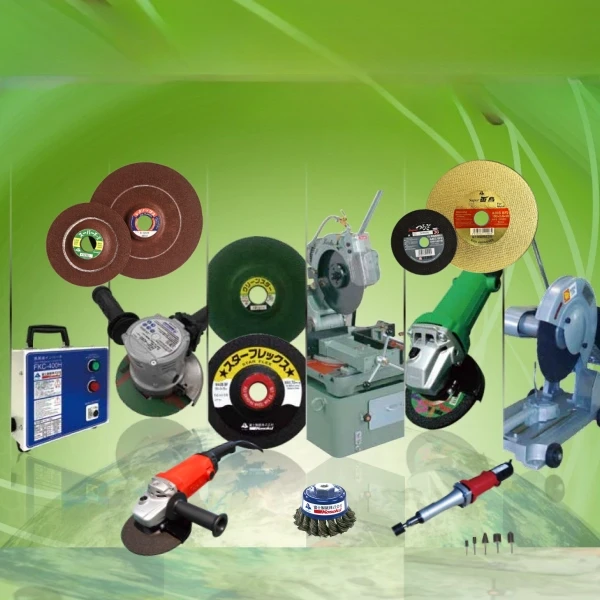
FUJI brings more than 70 years of experience in abrasives and power tools, with products for industrial metalworking, shipyards and foundries. Its range allows buyers to discuss abrasives and tool requirements together.
FUJI’s warm-press forming process is one part of its manufacturing approach. Assess the finished wheel through appropriate product documentation and application testing. For 400Hz high-frequency grinders, confirm the dedicated electronic power supply and model-specific requirements. Do not assume zero speed loss under load or automatic compatibility with other frequency systems.
Comparison of Price and Performance
Procurement officers often face the dilemma of Unit Price vs. Total Cost of Ownership (TCO).
Compare Matched Specifications and Total Cost
Compare like-for-like dimensions, wheel type, intended material, pack quantity and delivery terms. Include abrasive consumption, processing time, wheel changes and attributable rework in the cost per completed task. Do not infer value from nationality or unit price alone.
The Durability Factor (G-Ratio)
G-ratio is the volume of work material removed divided by wheel volume lost. It describes abrasive utilization, not removal speed or total purchasing cost. If a report uses mass measurements, identify that basis explicitly and do not compare it directly with volumetric results without suitable conversions.
Review the FUJI Super F2 grinding wheel wear test for an example separating equal-time steel removal and wheel consumption. The recorded results apply to the tested samples and conditions; they do not establish a universal service-life advantage.
How to Verify an Abrasive Wheel Manufacturer
- Request the exact product data, instructions and claimed certification evidence.
- Confirm manufacturing scope, batch identification and quality-issue handling.
- Agree on sample quantity, material, grinder, working time and acceptance criteria.
- Measure removal, wear, finish and time under consistent conditions; repeat trials to understand variability.
- Confirm minimum order, lead time, shipping costs and repeat-supply arrangements.
For dimensions, mounting and procurement checks, see the U.S. industrial grinding wheel buying guide.
Frequently Asked Questions
How do I choose the best grinding wheel supplier?
Compare application fit, documentation, traceability, technical support, trial results and delivery terms. Select the supplier that meets your production requirements rather than relying on price or brand alone.
Should I buy from a manufacturer or a distributor?
Either can be appropriate. A manufacturer may offer direct technical or production support; a distributor may offer local availability and multiple brands. Confirm the actual service, supply scope and total cost.
Does FUJI Hot Press mean curing under pressure?
In this guide, FUJI Hot Press refers to warm-press forming at 40–80°C depending on the product, followed by separate curing. Finished-wheel performance depends on formulation, reinforcement and process control as well as forming conditions.
Can I use a grinding wheel on a high-frequency grinder?
Check the specific grinder and wheel instructions for approved dimensions, mounting, guard, wheel type and maximum speed. Frequency alone does not establish abrasive compatibility. The grinder must also have its compatible power supply.
How should abrasive wheels be inspected?
Inspect and handle wheels according to the wheel and tool manufacturers’ instructions before mounting. Ring testing is not suitable for every wheel construction and cannot guarantee the absence of defects. Do not use a damaged or unsuitable wheel.
Conclusion
Summary of Essential Factors
The best abrasive wheel supplier combines the right product with documented quality, practical support and dependable supply. Build a shortlist, verify the specifications and compare representative trial results before committing to volume orders.
Final Recommendations for Selecting Suppliers
For heavy-duty metalworking, shipbuilding or foundry applications, explore FUJI abrasive products and confirm the exact wheel, tool and supply requirements with our team.
Discuss Your Workshop Requirements
Send your material, grinder model, current wheel dimensions, monthly usage and delivery destination. We can review suitable options and confirm sample and supply arrangements.
Contact FUJI


