Industrial metalworking applications demand tools that can handle heavy workloads while delivering uncompromised precision and reliability. Angle grinders are a crucial part of any industrial toolkit, known for their versatility in cutting, heavy stock removal, weld blending, and polishing tasks. But with so many options on the market, choosing the right machine for your specific job can be an overwhelming challenge.
This guide draws on real-world application testing and adherence to internationally recognized safety standards to help you make an informed choice. It will help you understand what makes an angle grinder ideal for heavy-duty use and how to match your operational needs to the best tools available from top Japanese power tool manufacturers.
The FUJI Advantage: 70 Years of Perfect Synergy
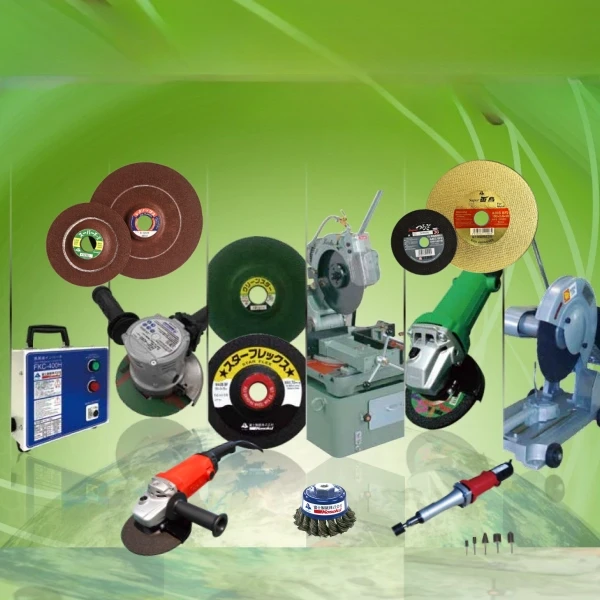
When selecting a power tool, the machine is only half of the equation; the abrasive is the other. FUJI is proudly the ONLY manufacturing enterprise in Japan that simultaneously produces both industrial power tools and high-performance grinding wheels.
With over 70 years of deep-rooted history in the metalworking industry, we possess the deepest understanding of how a grinder's RPM and torque curve interact with an abrasive wheel's bonding matrix. Because we engineer the entire system, we know exactly how to pair our tools and discs to achieve the ultimate working effect—maximizing your material removal rate (MRR) while saving operator effort.
The Japanese Engineering Edge: vs. Western Brands
When comparing industrial grinders to prominent European and American brands like Bosch, FEIN, Metabo, and DeWalt, the defining Japanese engineering advantage is the unmatched power-to-weight ratio. While Western brands are renowned for their power, that output often comes with significant physical bulk and weight.
In contrast, FUJI tools feature proprietary, 100% Japanese-manufactured motors that deliver equivalent, heavy-duty industrial output but in a noticeably lighter and more compact chassis. These highly durable, long-life motors are specifically designed to reduce the physical burden on the operator. When this lightweight tool advantage is combined with the aggressive cutting action of FUJI's self-manufactured abrasive consumables, the result is transformative: operators can work continuous 8-hour shifts without excessive fatigue, keeping your facility's operational efficiency and daily output at an absolute maximum.
Key Features to Look for in an Industrial Grinder
When evaluating a grinder, look beyond basic specifications to features that directly impact long-term performance, Total Cost of Ownership (TCO), and user safety.
- Motor Power and Stable Torque: A robust motor is the heart of any industrial grinder. Power should be measured not just in wattage, but in its ability to maintain stable torque under heavy load. High RPMs, like the 10,500 RPM found in FUJI's TS-125FR model, allow for aggressive material removal. A motor that bogs down under pressure is a productivity killer and causes wheel glazing.
- Ergonomics (Anti-Fatigue Design): Industrial shifts are long. A tool's design must actively combat operator fatigue. Look for a slim body and balanced weight distribution. According to ergonomic assessments in FUJI’s lab, our optimized balance configurations can reduce muscle strain by approximately 30% during prolonged pipeline or shipyard work.
- Safety as a Standard: Safety is non-negotiable. Double insulation protects the operator from electrical shock. Similarly, a dust-proof labyrinth housing is essential for protecting the tool's internal commutator from conductive metallic dust, which is a leading cause of short circuits in foundries.
Categorizing Grinders by Industrial Task
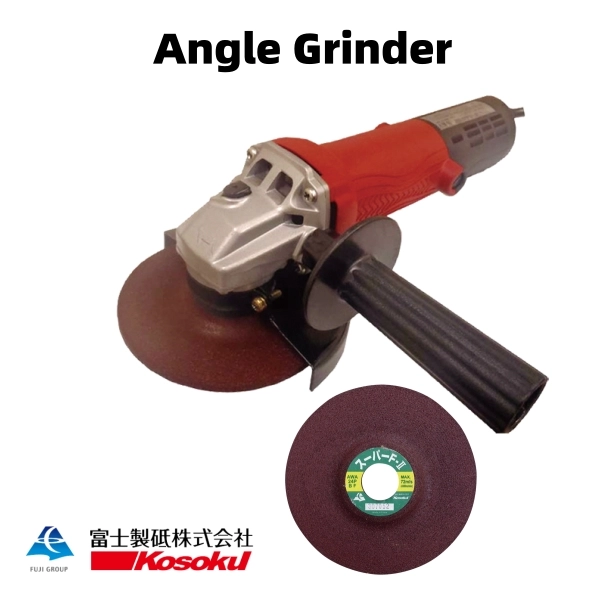
Different tasks require entirely different power delivery systems. As a comprehensive Japanese manufacturer, FUJI categorizes solutions based on your exact working environment:
1. Standard AC Electric Angle Grinders
The backbone of general metal fabrication. These grinders run on standard electrical grids and are perfect for daily cutting, grinding, and finishing. Models like the TS-125FR are built with reinforced cooling systems to survive continuous shifts without burning out.
For extreme environments like shipyards and heavy foundry casting removal, standard carbon-brush motors eventually fail. High-Frequency (HF) grinders operate on specialized 250Hz power using brushless induction motors. They maintain an absolute constant speed (no RPM drop under heavy pressure), drastically increasing wheel life and preventing motor burnout. They are the ultimate solution for 24/7 continuous grinding.
3. Pneumatic Angle Grinders (Maximum Safety)
If your operations take place in oil refineries, chemical plants, or environments with combustible dust, electric sparks are a severe hazard. Pneumatic (air-powered) angle grinders offer the safest solution for flammable and explosive environments. Furthermore, because air powers the tool, it naturally cools the internal components, allowing for endless continuous use without any risk of thermal overload.
Why Industrial-Grade Tools Boost Production Efficiency
The term "industrial-grade" signifies a tool built for continuity. These tools excel in boosting output by maintaining consistent performance even under the most punishing conditions.
| Feature |
Standard Commercial Grinder |
Industrial Grinder (Fuji Tools) |
| Duty Cycle |
Intermittent use only |
Continuous (8+ Hours shift) |
| Cooling System |
Standard Airflow |
Optimized Heat Dissipation |
| Component Life |
Standard Bearings |
Dust-Sealed Labyrinth Bearings & Gears |
- Durability Equals Less Downtime: Industrial grinders are built with superior bearings, heavy-duty windings, and reinforced armatures. This robust construction directly translates to reduced unscheduled downtime.
- Consistent Performance: A grinder with stable power output ensures that every cut and grind is consistent, minimizing costly rework.
- Versatility: True efficiency comes from using one reliable tool for multiple tasks, compatible with high-productivity accessories like flap discs, cut-off wheels, and wire brushes.
How to Match Your Grinder Choice with Industry Requirements
Your industry's specific demands should be the final arbiter in your selection process. Here is a quick selection guide:
- Heavy-Duty Metal Fabrication: For cutting thick beams or removing large weld seams, prioritize grinders with high power ratings and the ability to handle larger wheel diameters (5" to 7").
- Precision Machining & Finishing: In applications like pipeline welding or automotive restoration, control and high RPM are key. A compact grinder maintaining 10,000+ RPM is ideal for detailed work.
- Challenging/Hazardous Environments: If your work involves confined spaces or elevated platforms, a lightweight design is critical. If combustible materials are present, switch immediately to a pneumatic grinders model.
💡 Pro-Tip: Maintenance Matters
To extend the life of your industrial electric grinder, blow out the intake vents with compressed air weekly. Metal dust accumulation is the #1 killer of electric motors in fabrication shops.
Frequently Asked Questions (FAQ)
Q: How do Japanese angle grinders compare to European or American brands?
A: Japanese angle grinders like FUJI offer an identical industrial power output to brands like Bosch, FEIN, Metabo, or DeWalt, but feature significantly lighter, more compact, Japanese-manufactured motors. This superior power-to-weight ratio prevents operator fatigue during long shifts.
Q: What is the benefit of a "Slim Body" design?
A: A slim body (approx. 197mm circumference on the TS-125FR) allows the operator to fully wrap their hand around the tool. This provides better leverage, reduces grip fatigue, and improves safety and control during high-torque applications.
Q: Can I use 125mm discs on a 100mm grinder?
A: No. Never use a disc larger than the grinder is rated for. The peripheral speed will exceed the safe limits of the disc, and the safety guard will not fit properly, creating a severe fragmentation hazard.
Q: When should I use a pneumatic angle grinder instead of an electric one?
A: Pneumatic (air-powered) grinders should be used in highly flammable, wet, or explosive environments where electric sparks from a motor pose a critical safety hazard. They are also lighter and can run continuously without overheating.
Need the Perfect Tool-to-Abrasive Match?
Every industrial application is unique. Welcome to communicate with us; tell us your specific cutting or grinding tasks, and our engineering team will provide you with the optimal power tool and grinding wheel pairing.
👉 Contact FUJI Experts for a Custom Recommendation


